My Priorities
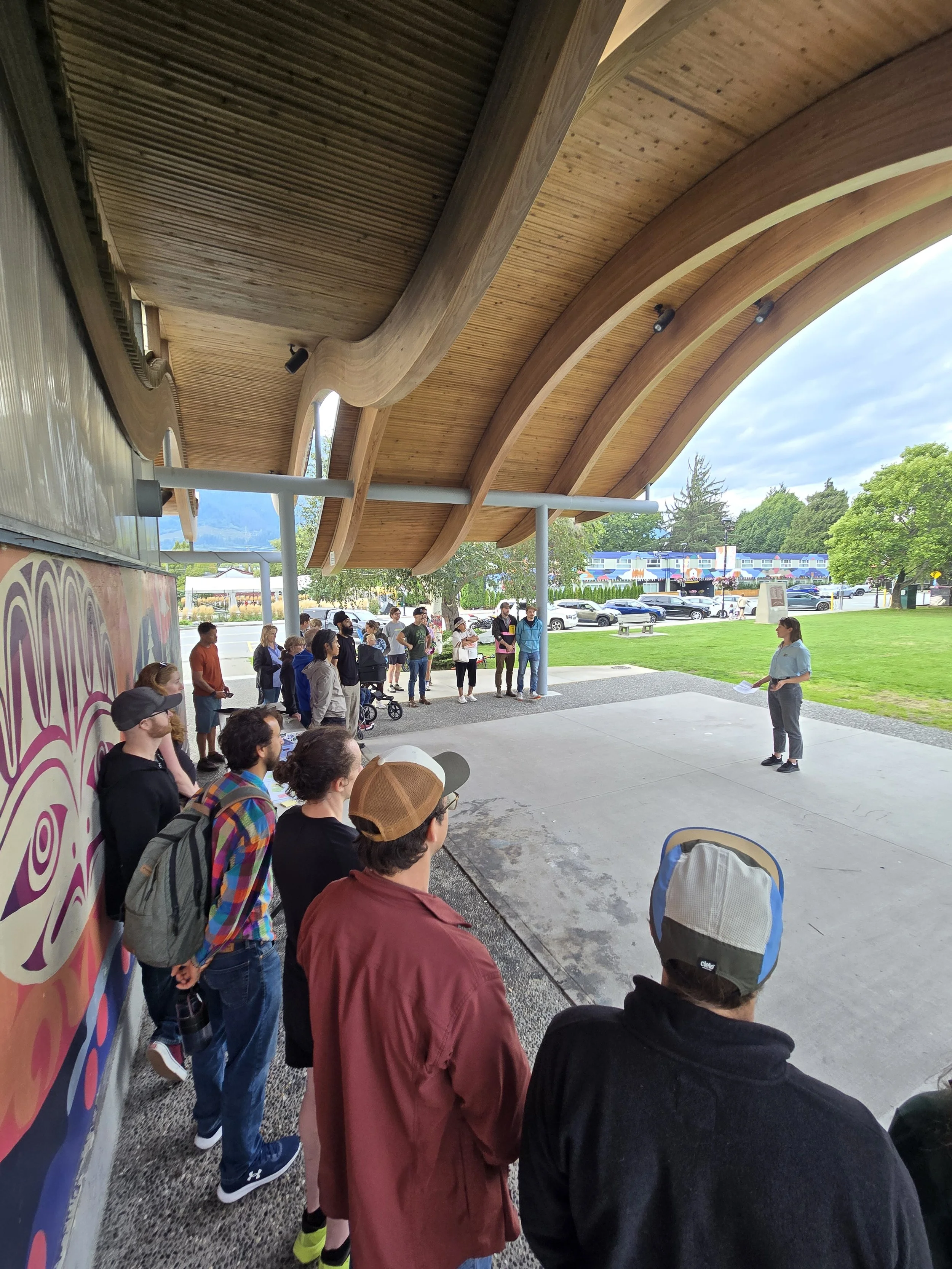
Put people first: Communities are about people. Squamish needs to prioritize diversity, vibrancy, and opportunity for existing and new residents. This means great public spaces for arts, music, and play; secure, attainable housing; and jobs in a range of industries.
Make growth work for Squamish: I support thoughtful development that adds housing we need and contributes to critical infrastructure. I also support using municipal tools to support job growth across sectors, including outdoor recreation, light industry, construction, and green technology.
Transparency and accountability: People are losing trust in government. Elected officials need to rebuild trust by taking ownership and accountability for their decisions and communicating openly and regularly with the public.
A community for all: Squamish is a community that cares. Let’s make sure our choices consider and care for those who are most vulnerable and at risk of being left behind.
Truth and Reconciliation: We need to learn and engage with Canada’s history of colonialism and the Calls to Action from the Truth and Reconciliation Commission of Canada. I strongly support Squamish’s continued partnership with the Squamish Nation as it pursues self-governance over Sḵwx̱wú7mesh people and lands.
My thoughts
As I talk to friends and neighbours, I am hearing about issues that people care deeply about for our town.
Here is my thinking on some of these topics. I will keep updating these and adding new topics over the campaign season.
Affordable Housing
People in our community are being squeezed by high rents, and it is putting our economy, diversity, and vibrancy at risk. Squamish needs to invest in secured, non-profit owned housing at scale now so that it can support generations of households in our community now and in the future.
Local government can’t build affordable housing on its own. In Squamish we are especially challenged because there is very little government land available to build on. But there are excellent non-profit housing providers in our community that have a track record of accessing government and other partner funding to deliver and operate the homes we need.
As a councillor, I would make sure we are using all the tools we have to make our local non-profit housing providers as competitive as possible for government and partner funds. This includes negotiating with developers to provide land or units, building up our housing reserve fund, and supporting zoning relaxations and tax and fee waivers.
How Squamish Should Grow
Decisions about how Squamish grows - ‘up’ or ‘out’ - has implications for the type of housing that gets built, the amenities that are delivered, and long-run infrastructure and service costs that are ultimately borne by taxpayers.
Growing ‘up’ through higher density infill can be a more sustainable way to grow while building our tax base and limiting new infrastructure needs and long-term maintenance costs.
Developing in greenfield areas can bring lower density housing that many are looking for, and other benefits like new road connections and land dedications for affordable housing. But it comes with potentially high infrastructure needs and maintenance costs that fall on taxpayers.
There is already quite a bit of undeveloped land within Squamish’s growth boundary, so I am cautious about one-off decisions to expand. These are conversations that are best had as part of an Official Community Plan process, which will be coming up during this Council’s term.
My current view for an OCP discussion is I would only support further expansion of the growth boundary if there is clear, feasible plan for financing and maintaining infrastructure and strong requirements for good planning and design and community benefits such as land for affordable housing.
Parking and Transportation
Past Councils approved parking relaxations to encourage development and revitalization of Downtown - and it worked! New housing has brought new people to Downtown and made it a fun, vibrant place to live.
As a Downtown resident and worker, I also know that growth has come with a side effect of parking challenges at peak times. I’m hearing some neighborhoods outside Downtown are also starting to feel this too.
My approach to parking would find a practical balance that recognizes both the reality of car use and the limited street capacity of our growing community.
Squamish’s parking bylaw should better reflect demand and use and have limited scenarios for variances. To mitigate existing street parking challenges, Squamish should look to approaches used successfully in other communities including resident permit parking, time limits, and meters.
I strongly support continued advocacy to build up our transit network, and work to expand Squamish’s safe cycling network for kids, families and seniors. This has the benefit of taking vehicles off streets so people who need a vehicle to get around can do so more easily.
Encampments and Public Safety
We have a responsibility to protect everyone living in our community, including people living outside. BC Courts have decided repeatedly that we cannot stop people from sheltering in public spaces if there is no adequate indoor shelter for them.
This means we need safe alternative shelters, low-barrier supportive housing, and more options for people to access supports and services within our own community.
I support Squamish’s participation in the Province’s Heart and Hearth program and the supportive housing development on Government Road. Some locations are not appropriate, and I did not agree with the original location proposed for the Hearth project. I also believe ongoing community engagement and input is crucial for any project to be successful.
I also strongly support advocacy for increased voluntary and involuntary substance use and mental health care in our region, the RCMP Car 99 program with dedicated mental health nurses riding with officers, as well as locally-based services provided by Vancouver Coastal Health and other community partners.
Taxation and Spending
Property tax increases in the last two years have been high relative to past trends in Squamish - both in rate and in dollar value. I know many homeowners are feeling squeezed.
We are not alone in this trend, as many other BC communities our size are seeing rising budgets and property taxes, driven by growth and aging infrastructure.
As a candidate without in-depth knowledge of the District’s budget, I won’t commit to freezing property taxes without understanding the impact on Squamish’s core services, infrastructure, and priority policy work. Council has a responsibility to approve budgets that adequately resource critical functions and the work the community wants to see progress. The District can’t run operating deficits and is limited in how much it can borrow.
That said, I am in favour of budget transparency, maximizing value for public dollars, and leveraging partner funds as much as possible.
Climate Action
Squamish is experiencing the staggering and undeniable effects of a warming climate, and every year is more alarming than the last, both locally and around the world.
For that reason, Squamish needs to keep doing its part to reduce greenhouse gas emissions and mitigate the impact of our changing climate. I support the 6 big moves of the town’s existing Community Climate Action Plan and would continue to vote in support of its implementation.
On WLNG: As the project comes online and especially as flaring starts, I expect there will be new community questions and concerns. My expectation is that WLNG is accountable to all levels of government with regular reporting and responsiveness to concerns. I expect WLNG to help pay for the District’s 10-year capital plan either through taxation or a fair tax deal, and I have not seen enough analysis to be convinced that the current tax deal in front of Council achieves this.